Can I dim multiple LED lights with one dimmable LED driver? Dimmable LED Drivers
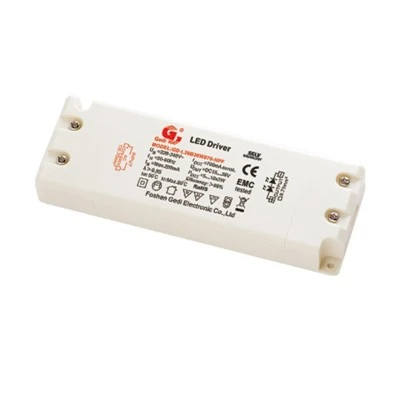
As a supplier of dimmable LED drivers, I often get asked this question by customers, designers, and installers alike. The short answer is yes, you can dim multiple LED lights with one dimmable LED driver. However, there are several factors you need to consider to ensure a successful and efficient setup.
Understanding Dimmable LED Drivers
Before we delve into the details of using one driver for multiple lights, let’s quickly recap what a dimmable LED driver is. A dimmable LED driver is a power supply that not only provides the correct voltage and current to your LED lights but also allows you to adjust the brightness of those lights. It achieves this by changing the amount of power delivered to the LEDs, a process controlled by a dimmer switch or other control system.
There are different types of dimmable LED drivers available on the market, including leading-edge (TRIAC), trailing-edge, 0 – 10V, DALI (Digital Addressable Lighting Interface), and PWM (Pulse Width Modulation) drivers. Each type operates in a slightly different way and is compatible with specific types of dimmers and control systems.
Factors to Consider When Dimming Multiple LEDs
-
Total Wattage and Current Rating
The most crucial factor when using one dimmable LED driver for multiple lights is the total wattage of the connected LEDs. The driver must be able to handle the combined wattage of all the LEDs you plan to connect. Exceeding the driver’s wattage capacity can lead to overheating, reduced lifespan of the driver and LEDs, and in some cases, even a complete failure of the lighting system. For example, if you have a 100 – watt dimmable LED driver, you should not connect LEDs whose total wattage exceeds 100 watts. It’s also advisable to leave a small margin (e.g., 10 – 15% less than the maximum rating) to ensure a more stable operation.
The current rating is also important. LEDs have specific current requirements, and the driver needs to supply the appropriate current to each LED or group of LEDs. Incorrect current can result in uneven brightness or even damage to the LEDs. -
Compatibility of the LEDs
All the LEDs you connect to a single driver should be compatible with each other and with the driver. This includes factors such as the color temperature, color rendering index (CRI), and the type of dimming technology. For instance, if you mix warm – white LEDs (2700K – 3000K) with cool – white LEDs (4000K – 6500K), you may get an inconsistent lighting color when dimming. Similarly, if you have some LEDs that are only compatible with 0 – 10V dimming and others with TRIAC dimming, you may face dimming issues when using a single driver. -
Wiring and Configuration
Proper wiring is essential for dimming multiple LEDs with a single driver. You need to ensure that the wiring is done correctly to avoid voltage drops, which can cause uneven brightness among the LEDs. Most often, LED lights are connected in parallel or series – parallel configurations. In a parallel connection, each LED or group of LEDs receives the same voltage, while in a series connection, the current remains the same, but the voltage is divided among the LEDs.
When wiring multiple LEDs in parallel, be cautious of the current flow. If one LED fails in a parallel circuit, it can cause an increase in current to the other LEDs, which may lead to premature failure. In a series – parallel configuration, a combination of series and parallel connections is used to balance the voltage and current requirements of the LEDs. -
Control System
The control system used for dimming plays a vital role in the performance of the multiple – LED setup. The dimmer switch or control device should be compatible with the type of dimmable LED driver you are using. For example, if you have a 0 – 10V dimmable LED driver, you need a 0 – 10V dimmer switch to control the brightness. Some advanced control systems, like DALI, allow for more precise individual control of multiple lights, even when connected to a single driver. However, these systems require a more complex installation and configuration.
Benefits of Using One Dimmable LED Driver for Multiple Lights
-
Cost – Efficiency
Using a single dimmable LED driver for multiple lights can significantly reduce the cost of the lighting system. Instead of purchasing multiple drivers, you only need one, which reduces the initial investment. Additionally, having fewer components means lower maintenance costs in the long run. -
Simplified Installation
A single driver simplifies the installation process. You don’t have to deal with the complexity of wiring and mounting multiple drivers. This can save time and labor costs, especially in large – scale lighting projects. -
Uniform Dimming
When all the LEDs are connected to the same driver, they are more likely to dim uniformly. This creates a more aesthetically pleasing lighting effect, especially in applications such as commercial spaces, offices, and residential living areas.
Limitations and Challenges
-
Limited Flexibility
Connecting multiple LEDs to a single driver means that all the lights will be dimmed together. If you want individual control over each light or group of lights, a single – driver setup may not be suitable. In such cases, you may need to use a multi – channel driver or separate drivers for each light. -
Failure Risks
If the driver fails, all the connected LEDs will stop working. This can be a significant drawback, especially in critical applications such as emergency lighting or high – end commercial lighting. To mitigate this risk, it’s advisable to use a high – quality driver from a reputable manufacturer and have a backup plan in place.
Real – world Applications
There are numerous real – world applications where using one dimmable LED driver for multiple lights makes sense. In a small retail store, for example, you can use a single driver to power and dim multiple LED recessed lights in the display area. This creates a consistent and adjustable lighting environment that highlights the products effectively.
In a residential living room, a single driver can be used to control multiple LED ceiling lights. This allows the homeowner to adjust the brightness according to different activities, such as watching TV, reading, or hosting a party.
Conclusion
In conclusion, it is indeed possible to dim multiple LED lights with one dimmable LED driver. However, it requires careful consideration of factors such as wattage, compatibility, wiring, and the control system. When done correctly, using a single driver offers cost – efficiency, simplified installation, and uniform dimming.

If you are considering a project where you need to dim multiple LED lights, we are here to help. As a supplier of dimmable LED drivers, we have a wide range of products to meet your specific needs. Our team of experts can provide you with professional advice on choosing the right driver, installing the lighting system, and ensuring its optimal performance. Contact us to discuss your requirements and start your lighting project on the right foot.
LED Driver 0 10v Dimming References
- "LED Lighting Handbook" by Fred E. Schubert and Jong – Kyu Kim
- Various technical documentation from LED driver manufacturers.
Foshan Gedi Electrnoic Co., Ltd.
As one of the most professional dimmable LED drivers manufacturers in China, we’re featured by quality products and good price. Please rest assured to buy advanced dimmable LED drivers for sale here from our factory. If you have any enquiry about cooperation, please feel free to email us.
Address: 4th Floor, Building 8, South District, Huayi Decoration City, No.10, Laixiang Road, Shiwan Sub-district, Chancheng District, Foshan City, Guangdong Province, China.
E-mail: market@gedi-lighting.com
WebSite: https://www.gedi-lighting.com/
