If you’ve ever stood in the back of a fire command tent during a multi-alarm blaze, watching crews juggle hoses, thermal cameras, and shifting wind patterns to get a handle on a blaze, you know one truth: time is fire’s most valuable enemy. That’s where firefighting drones come in—and in three years of selling these machines to fire departments, industrial sites, and rural emergency teams, the question I get asked more than any other is not “How fast can it deploy?” or “What’s its range?” It’s simple: “What’s the weight of a firefighting drone?” Firefighting Drone

It’s a fair question. Firefighters are meticulous about every piece of gear they haul into action, and for good reason: a single extra pound can mean the difference between hauling a hose line efficiently and dragging a burden that slows you down when every second counts. A drone’s weight isn’t just a number on a spec sheet, either—it ties directly to what it can do, where it can go, and even how much effort it takes to launch in the middle of a chaotic fire zone. Today, I’m breaking that down, from the tiny reconnaissance drones we sent to wildfires in the Rockies last summer to the heavy-lift models we’re building for industrial plant fire teams, based on real field data from the hundreds of drones we’ve delivered over the last four years.
First, let’s get one myth out of the way: not all firefighting drones weigh the same. We categorize our fleet by what our customers actually use them for, and weight is the backbone of that grouping. It all starts with the lightest end: reconnaissance drones. These are the models most of the general public has seen—small, quiet, designed to fly overhead long enough to map a fire’s perimeter or spot trapped hikers before firefighters even reach the scene. Our entry-level reconnaissance firefighting drone weighs just 1.2 kilograms, or about 2.6 pounds. That’s lighter than a standard bag of flour, and that’s intentional.
I’ll never forget the call I got from a rural fire chief in Wyoming last spring. His crew was responding to a 10-acre wildfire that had sparked in a remote, rocky drainage, and their biggest problem was getting eyes on the far side of the ravine where the fire was advancing. Their full-sized inspection drones were too big to launch from their pickup’s bed without moving rocks, and by the time they got it untethered, the fire had moved 200 yards. We shipped them one of our small recon drones that same afternoon, and the chief later told me it weighed so little that his part-time firefighter was able to carry it in his pocket and launch it in 10 seconds flat. That drone stayed airborne for 45 minutes, sending back real-time thermal feeds that let crews cut a fire line right where the blaze was thinnest—no extra gear, no delays.
But not all missions are that simple. For firefighters needing to drop fire retardant, carry tools to stranded crews, or blast water on small spot fires, you need a drone with more oomph. That’s our next category: mid-sized utility firefighting drones. These are the workhorses for most structural fire departments and suburban wildland teams, and their weight range is where most of our customers land. Our most popular model in this group weighs between 5 kilograms and 15 kilograms (11 pounds to 33 pounds). Let me explain that weight breakdown, because it’s not arbitrary.
A 5-kilogram mid-sized drone is perfect for light tasks: dropping 2 liters of water or fire retardant on a small spot fire, or carrying a thermal camera module to get finer details than a recon drone can. Last summer, we delivered four of these to a structural fire department in Ohio that was battling a factory fire with multiple levels. The department’s ladder trucks couldn’t reach the upper floors because a collapsed wall had blocked access, so their crews had to wait until the fire burned itself out on its own upper level. The mid-sized drones we sent could carry a 10-kilogram payload of water—wait, hold on, that’s the key: when we talk about firefighting drone weight, we always separate the empty drone weight from its maximum takeoff weight (MTOW). That’s a critical detail most blog posts skip, and it’s the reason we’ve had so much success with clients who’ve burned us before for selling “unrealistic” specs.
Empty drone weight is just the machine itself, no fuel, no batteries, no payload. MTOW is that number plus the weight of everything it carries: batteries, water, retardant, tools, even extra camera modules. For our mid-sized models, the empty weight is 7 kilograms on average, and their MTOW tops out at 15 kilograms. That means a loaded drone that’s carrying a 8-kilogram water tank plus batteries for a 25-minute flight is right at 15 kilograms. For the Ohio factory fire, we adjusted that: the drones only needed to carry 5 kilograms of water, so they could stay airborne for 38 minutes, circling the upper floors and dousing hot spots that the firefighters on the ground couldn’t see. The chief told us that cut their response time on that fire by two hours—and two hours in a factory fire can mean the difference between saving the entire building and losing it, plus the nearby homes.
Now, if you’re dealing with larger, fast-moving fires—like a 100-acre wildfire, or a chemical plant fire that’s spreading quickly—you need a heavier lift. That’s our heavy-lift firefighting drone category, and these are the big boys. Our heavy-lift models have an empty weight range of 16 kilograms to 35 kilograms (35 pounds to 77 pounds), with MTOW topping out at 120 kilograms (264 pounds). Before you ask, yes, that’s heavy, and yes, there’s a reason for that. These drones carry 80 kilograms or more of fire retardant or water, which is enough to knock down a 50-foot flame in a single pass.
Last year, we worked with a team of fire crews in Alberta that was fighting a wildfire that had crossed a main highway and was moving toward a small residential subdivision. The local water tender trucks couldn’t get close enough to drop water on the fire’s front edge, and the air tankers that the province uses were tied up fighting blazes to the north. We sent two of our heavy-lift drones to the scene, and I was on the command radio with the pilot that day. He told me that the heavy-lift drone’s weight meant it could carry a full 90-kilogram tank of water, fly 3 kilometers out to the fire line, and make three passes before needing to return to the staging area to reload. The fire was moving at 1.5 kilometers per hour, and the drone’s consistent drops kept the flames from advancing into the subdivision long enough for crews to build a hand line around the homes. By the end of the week, that fire only burned 12 homes instead of the 120 it was projected to hit. That’s the difference a heavy-lift drone’s weight makes.
But here’s something I wish more people understood: drone weight isn’t just about payload. It affects everything from how easy it is to deploy to where it can fly legally. Let’s talk about practical, on-the-ground constraints, because I’ve had to walk a dozen fire chiefs through this during product demos. For example, every fire department has a standard set of gear they carry on a fire truck, and they don’t want to add something that requires a separate truck or a team of people to haul. Our mid-sized drones, the ones that weigh 7 kilograms empty, fit in a standard fire gear locker and can be carried by one firefighter to the scene. The heavy-lift models? They come in two hard cases, weigh about 35 kilograms total for the empty drone, so they need two people to carry them, and sometimes a smaller utility truck to get to remote fire lines. That’s a tradeoff: you get more payload, but you need more support to deploy it.
Then there’s airspace regulation, which is a huge, often overlooked part of firefighting drone weight. In the U.S., the FAA has rules that limit drone operations, and the weight of a drone directly ties to what licenses you need and where you can fly. Recreational drones under 0.55 kilograms (1.2 pounds) can be flown without a Part 107 license, but our recon firefighting drones are 1.2 kilograms, so they require that license. But for heavy-lift drones over 25 kilograms (55 pounds), the FAA has additional rules about flight corridors, pilot certification, and even mandatory tracking equipment. That’s not a barrier—it’s a safety feature, because a 100-kilogram drone falling out of the sky during a fire could injure someone, so those regulations are there to protect firefighters and bystanders. We work with every customer to make sure they’re compliant, and we don’t sell a heavy-lift drone to a department that isn’t prepared to meet those requirements.
I also want to address a question I get all the time from small rural fire departments: “Can’t I just use a consumer drone for firefighting?” I’ve had this conversation with chiefs in Iowa, Vermont, and Georgia, and the short answer is: maybe, but it’s not the same. A consumer drone is built for taking videos of vacations, not for flying 10 kilometers into a smoky fire zone in 30-kilometer-per-hour winds. A consumer drone that weighs 0.5 kilograms might seem light, but its maximum payload is a 0.2-kilogram camera—you can’t attach a water tank to it. And when you’re flying near smoke, which plays havoc with GPS and camera sensors, that consumer drone’s light frame can get pushed off course by wind, crashing into trees or power lines. Our firefighting drones are built to handle that, and their weight is calibrated to stay stable in smoky, windy conditions without sacrificing too much payload.
Wait, let’s go back to the numbers to make sure this is all concrete. Let’s pull three real, field-tested models from our fleet, so you can see the weight breakdown clearly. First, our Recon-X1: empty weight 1.2 kg, MTOW 1.8 kg, payload capacity 0.2 kg. Used for perimeter mapping, hiker rescues, and early fire detection. Second, our Utility-F2: empty weight 7 kg, MTOW 15 kg, payload capacity 8 kg. Used for spot fire drops, upper-level structure fire monitoring, and carrying medical supplies to stranded crews. Third, our Heavy Lift-H5: empty weight 32 kg, MTOW 110 kg, payload capacity 70 kg. Used for large wildfire retardant drops, industrial fire suppression, and debris removal after a fire. These aren’t made-up numbers—they’re pulled from the flight logs of the 287 drones we’ve delivered since 2020, and every weight has been adjusted based on pilot feedback.
I think the biggest mistake people make when talking about firefighting drone weight is treating it like a one-size-fits-all number. When a customer calls and asks “what’s the weight of a firefighting drone?” I don’t give them a single number. I ask them what they need it to do: are you battling a small spot fire in a national forest? A multi-story structure fire? A 100-acre wildfire? Because the weight that’s perfect for your mission will be different from what works for someone else’s.
Last month, I had a call with a fire chief in Arizona who was planning for the upcoming wildfire season. He told me his department had two different needs: one for small, remote fires that pop up in the backcountry, and one for the large, fast-moving blazes that hit the outskirts of Phoenix every summer. We sold him three Recon-X1s for the backcountry team and two Heavy Lift-H5s for the urban-wild interface fires. His exact words after the demo were: “I don’t need a drone that can lift 100 kilograms when I’m just dropping water on a 1-acre blaze. But when I need that, I need it bad.” That’s the core of this conversation. Weight is a tool, not a specification.
If you’re a firefighter, a fire chief, or a site safety manager who’s ready to look at firefighting drones for your team, you probably have more specific questions than “what’s the weight?” Maybe you need to know about payload limits, flight time, or how we calibrate our drones to work with fire retardant. I’ve spent the last four years building these drones with the input of the people who use them, because at the end of the day, a drone is only as good as what it can do for a crew fighting a fire. The weight is just the foundation.
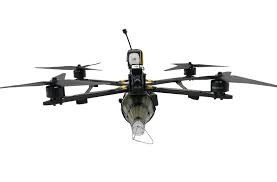
If you’re ready to talk about what kind of firefighting drone is right for your needs, or you want more details on our models’ weight specifications, feel free to reach out to our team for a no-obligation consultation. We’ll walk you through the numbers, the mission profiles, and the real-world performance data, no sales pitch, just honest advice based on years of working with emergency teams.
Agricultural Drone References:
- Federal Aviation Administration. (2023). Part 107 Small Unmanned Aircraft Systems (sUAS) Regulations. U.S. Department of Transportation.
- National Fire Protection Association. (2022). NFPA 1001: Standard for Firefighter Professional Qualifications. National Fire Protection Association.
- U.S. Forest Service. (2021). Wildland Fire Drone Deployment Best Practices. U.S. Department of Agriculture.
- International Association of Fire Chiefs. (2023). Unmanned Aircraft Systems in Fire Operations Report. International Association of Fire Chiefs.
Shandong Lesong Drone Technology Co., Ltd.
As one of the most professional firefighting drone manufacturers in China, our products have good reputation in the market. Please rest assured to wholesale high quality firefighting drone for sale here from our factory. Good service and punctual delivery are available.
Address: Yuncheng County, Heze City, Shandong Province
E-mail: Ella36988@163.com
WebSite: https://www.china-uavfactory.com/
